
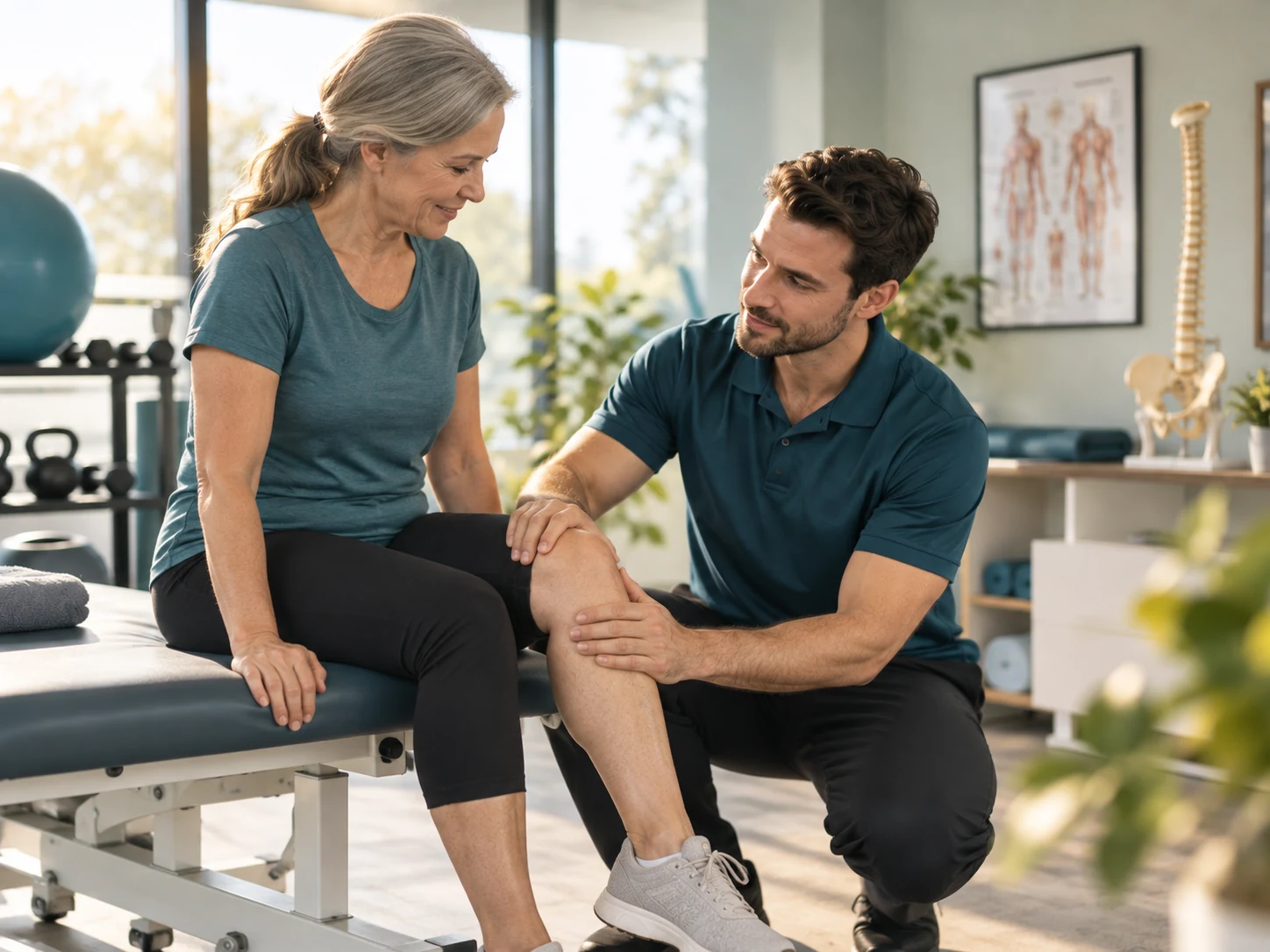

Knee osteoarthritis can make ordinary activities such as walking, climbing stairs or getting up from a chair feel more difficult. Pain and stiffness may lead people to reduce activity, yet losing strength and movement can make daily function even harder over time.
Physiotherapy focuses on finding a level of activity your knee can manage and building strength, mobility and confidence from there. The goal is not to pretend the joint has not changed. It is to improve how well you can function with the joint you have.
What is knee osteoarthritis?
Osteoarthritis affects the whole joint, not only the cartilage. Changes can involve the joint surfaces, surrounding bone, muscles and other structures. Symptoms vary widely between people and do not always match what an X-ray looks like.
Common symptoms include pain during or after activity, stiffness after being still, difficulty with stairs or standing from a chair, and reduced knee movement. Some people notice swelling, grinding or clicking as well.
Why is exercise important?
Exercise is one of the key non-surgical strategies for managing knee osteoarthritis. Stronger muscles help support and control the joint during walking, stairs and other weight-bearing activities. Regular movement also helps maintain mobility and general physical capacity.
The challenge is choosing the right starting point. Someone who is already active may need a very different program from someone whose knee pain has caused them to avoid activity for months.
Appropriate exercise is not the same as repeatedly overloading an irritable joint. A physiotherapy program should be adjusted to your current symptoms and capacity, then progressed gradually.
Building leg strength
Strengthening the muscles around the knee is often an important part of treatment. The quadriceps at the front of the thigh are especially relevant, but the program should not stop there. Hip and trunk strength can influence how forces are managed through the leg during walking, stairs and other tasks.
Exercises may begin with supported or lower-load movements and progress toward more demanding activities as tolerance improves. The exact exercise matters less than having an appropriate dose and a progression that is realistic for the individual.
Maintaining range of motion
A knee that becomes increasingly stiff can make daily activity more difficult. Range-of-motion and flexibility exercises may be used to help maintain or improve the ability to bend and straighten the knee.
Mobility work is often combined with strengthening rather than treated as a separate goal. The knee needs both movement and enough muscular support to use that movement effectively.
Aerobic activity still matters
Walking, cycling, swimming and other aerobic activities can help maintain cardiovascular fitness and endurance. For some people, water-based exercise is a comfortable way to remain active because buoyancy reduces the amount of body weight placed through the knees while the water still provides resistance.
The best option is one that is appropriate for your symptoms and that you can perform consistently.
What if stairs or walking hurt?
Rather than removing these activities completely, a physiotherapist may look at how you perform them, how much you are currently doing, and whether the overall load needs to be modified temporarily.
Treatment may include strengthening, pacing strategies, changes in activity frequency or, in some situations, discussion of a brace or walking aid. These decisions are individual and should be based on the assessment rather than used automatically for everyone with osteoarthritis.
Does knee osteoarthritis always lead to surgery?
No. Many people manage knee osteoarthritis without surgery. Physiotherapy, exercise and activity management can improve pain and function, although some people with advanced symptoms may eventually need to discuss additional treatment options with their medical team.
A useful rehabilitation plan also prepares the person for the future. If surgery does become appropriate, maintaining as much strength and function as possible beforehand can still be valuable.
Progress is about function
Improvement may mean walking farther, using stairs with more confidence, getting out of a chair more easily, returning to recreational activity or needing fewer rest breaks. These functional changes can be more meaningful than focusing only on a pain number.
Knee osteoarthritis does not automatically mean “stop using the joint.” Appropriate movement and progressive strengthening can help improve mobility, function and confidence while respecting the knee’s current tolerance.
American Physical Therapy Association / ChoosePT — Physical Therapy Guide to Knee Osteoarthritis.
Arthritis Foundation — Osteoarthritis Physical Therapy: Finding Safe, Effective Activities.